WHAT COMPLIANCE MEANS IN PRACTICE
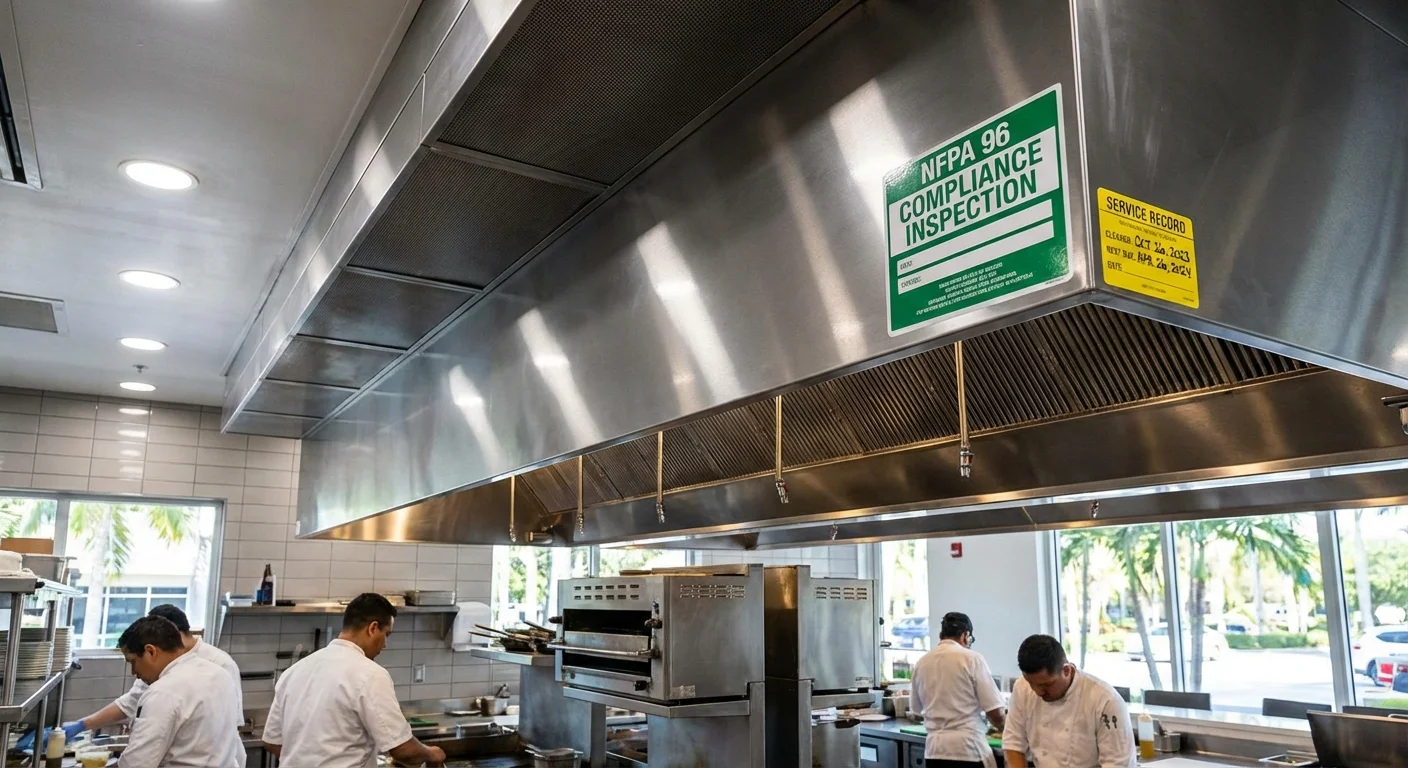
The visible hood is only one part of the fire-safety picture.
Commercial cooking exhaust systems collect grease through the canopy, filters, plenum, ductwork, and rooftop fan. Cleaning frequency and scope depend on cooking volume and methods, the system’s condition, applicable requirements, and the authority having jurisdiction.
D&V Pro’s technicians are NFPA 96 trained/certified. We inspect the accessible system, define the service scope, clean the included components, and document the result.
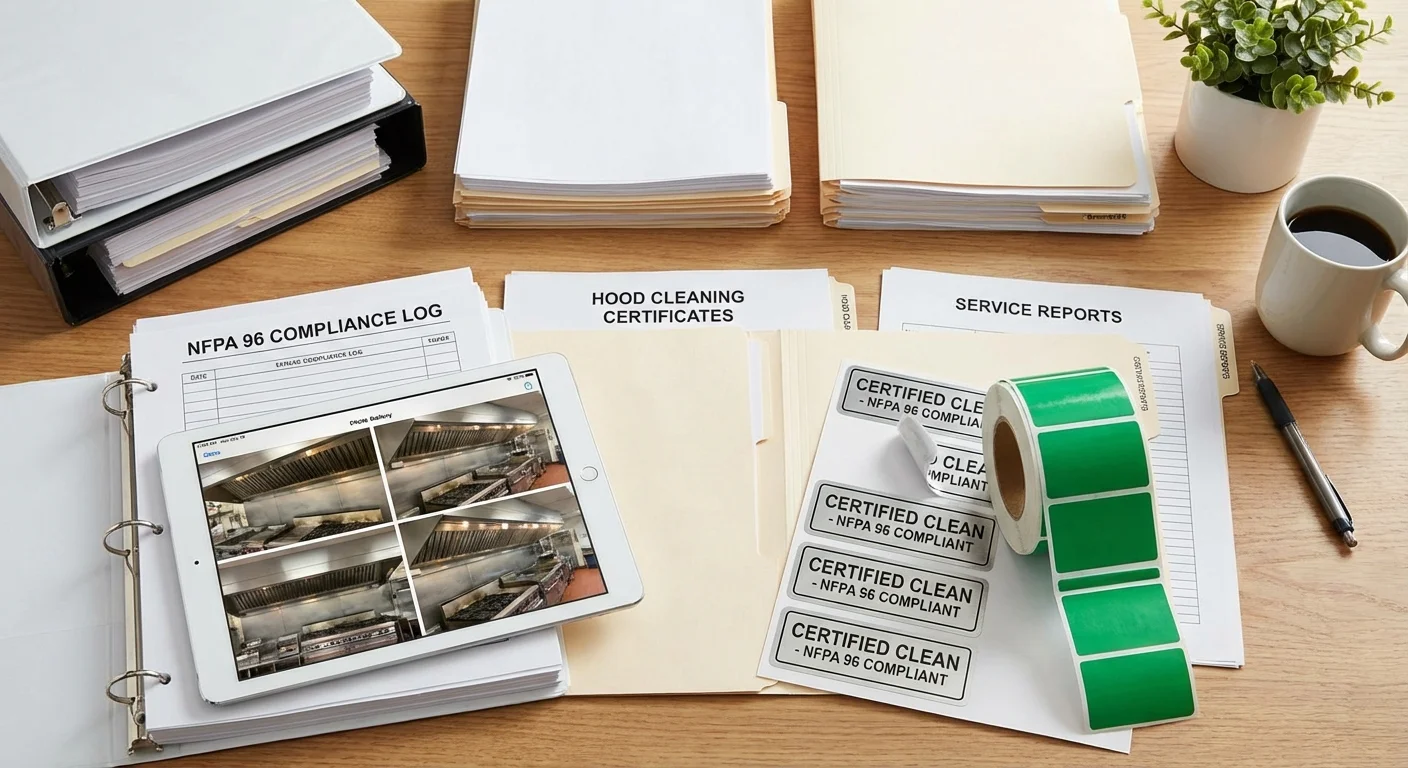
Documentation included with service
- Before-and-after photo documentation
- Dated service sticker
- Clear communication about visible conditions
- Recommended next service timing based on the kitchen and system
Who may ask for these records?
Fire inspectors, facility managers, insurers, property managers, franchise teams, and business owners may all need a clear maintenance history. Keep completed service records with the facility’s fire-safety, inspection, insurance, and maintenance files.
How often should your system be cleaned?
There is no responsible one-line answer for every kitchen. Solid-fuel cooking, high-volume frying, charbroiling, seasonal use, and lower-volume operations create very different grease loads. The authority having jurisdiction and your insurer may also set requirements. We’ll recommend a schedule based on the actual operation instead of guessing from a calendar alone.
Before an inspection
If an inspection or reopening date is approaching, call as early as possible. Tell us the deadline, last known cleaning date, cooking type, system count, and any visible grease or access problems. Same-day and emergency availability may be possible depending on routing and scope.